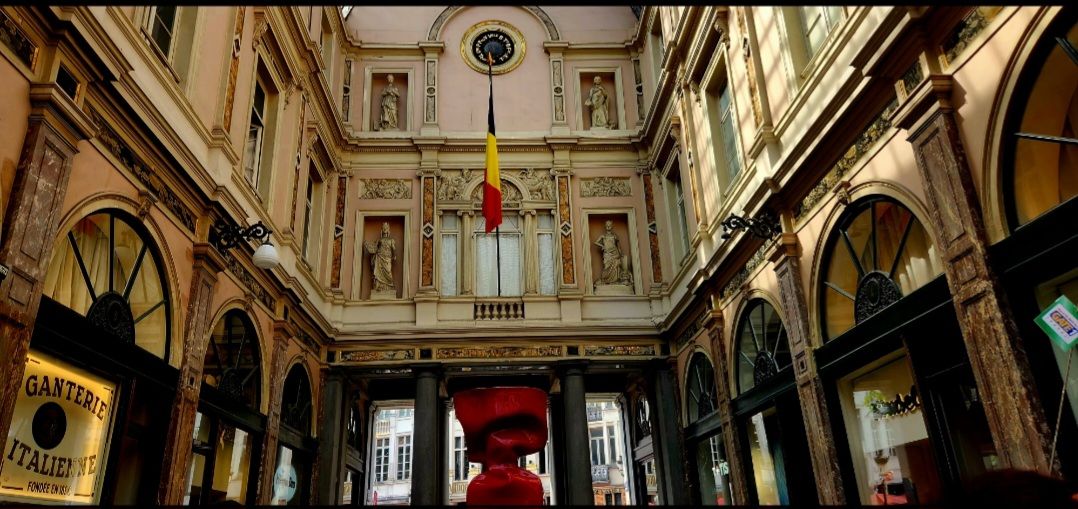
Exploring Belgium: An underrated European gem that quietly steals your heart.
Belgium is one of those countries that quietly slips under the radar, often overshadowed by its larger neighbors like France, Germany, and the Netherlands. I’ll admit, before visiting in the summer of 2025, I didn’t quite know what to expect — and that’s exactly what made the experience so unforgettable.
Beyond the clichés of waffles and chocolate lies a country rich in character, beauty, and soul. It’s a place where grand town squares, elegant spires, and storybook streets feel effortlessly authentic and refreshingly uncrowded. From world-class cuisine and legendary beer to art-filled museums, Belgium rewards the curious traveler with a perfect balance of old-world charm and modern energy.
Crossing the Border: From the Canals of the Netherlands to the Heart of Belgium
After an incredible time exploring the winding canals and vibrant culture of the Netherlands, it was time to head south. The transition from the Dutch countryside into Belgium is seamless, but you can feel the energy change as the landscape shifts toward the historic grandeur of the Brussels region. My first real ‘welcome’ to the country wasn’t a signpost or a border check, but a silver glimmer on the horizon. As I drove toward Brussels, the Atomium began to tower over the highway—a monumental introduction to a country that perfectly blends mid-century futurism with medieval charm.
A Giant Among Men: The Atomium in Brussels

While traveling south from the Netherlands toward the heart of Belgium, I made a stop that I can only describe as surreal: The Atomium.
Standing at the foot of those silver spheres, looking up at the bright blue sky, I felt like I had stepped into a 1950s vision of the future. It’s a must-stop for any videographer or traveler passing through Brussels.

Seeing this structure in person is a completely different experience than seeing it in photos. I was absolutely impressed by the sheer size of this monumental structure—it’s a massive iron crystal magnified 165 billion times.
The Story Behind the Spheres: I learned that the Atomium was originally designed as the centerpiece for the 1958 World’s Fair. Like the Eiffel Tower in Paris, it was actually supposed to be torn down after the fair ended! However, the Belgian people fell in love with its futuristic design and optimistic spirit, so they decided to keep it as a permanent part of the Brussels skyline.
What’s Inside Today? The Atomium isn’t just a statue; it’s a living building! You can actually go inside the spheres:
- The Observation Deck: Located in the highest sphere, it offers a breathtaking 360-degree view of Brussels.
- The Panoramic Restaurant: You can have a meal “near the clouds” with some of the best views in Europe.
- The Kids’ Sphere: There is a dedicated section for school groups and children (often called the “Kids’ Sphere”) where they can even spend the night on educational field trips!
- Museum & Exhibitions: The other spheres house permanent collections about the 1950s and the history of the Expo.
The Three Cities You Can’t Miss
While many travelers only see the airport, Belgium’s true magic is found in its distinct cities. During my trip, these three stood out for their unique videography potential and atmosphere:
- Brussels: The heartbeat of Europe. The Grand Place is, without a doubt, one of the most beautiful squares in the world—especially when the gold leaf on the buildings catches the afternoon sun.
- Bruges: Often called the “Venice of the North,” this city is a medieval dream. The winding canals and swans near the Minnewater (Lake of Love) make it feel like you’ve stepped into a fairytale.
- Ghent: My personal favorite for a “local” feel. It’s a vibrant university city with stunning waterfront architecture at the Graslei, but with fewer crowds than Bruges.
The Language Puzzle: There is No “Belgian” Language
One of the most fascinating things I discovered during my summer 2025 visit is that there is actually no such thing as the “Belgian” language. Instead, Belgium is a unique polyglot nation with three official languages, and where you are in the country completely changes what you’ll hear on the street.
- Flemish (Dutch): Spoken primarily in the north (Flanders). If you’re visiting Bruges, Ghent, or Antwerp, you’ll see signs in Dutch.
- French: The dominant language in the south (Wallonia) and very widely used in Brussels.
- German: A smaller official language spoken in the eastern Cantons near the German border.
Traveler’s Tip: Brussels is officially bilingual (French and Dutch), so you’ll see every street sign written in both! While most Belgians speak incredible English—especially the younger generation in the north—I found that starting with a simple “Bonjour” in Brussels or a “Hallo” in Bruges was always met with a warm smile. It’s a small gesture that shows you respect the local culture.
The “Lily Lu” Language Tip
While most people in the major cities speak wonderful English, I found that learning just two words made a huge difference in how I was greeted. Since you’ll be moving between French-speaking and Dutch-speaking areas, keep these in your back pocket:
- In Brussels or Wallonia (French): Use “Merci” (pronounced mer-SEE) for “Thank you.”
- In Bruges, Ghent, or Antwerp (Dutch/Flemish): Use “Dank u” (pronounced dank-oo) for “Thank you.”
Pro Tip: If you’re in a bilingual city like Brussels and you aren’t sure which one to use, a friendly “Thank you” in English is always perfectly fine! But trying the local “Merci” usually earns you an extra-wide smile.
Best Time to Visit.
Why Summer 2025 Was Magic
I explored Belgium in the summer, and I highly recommend it for several reasons. The weather was pleasantly warm but rarely “heatwave” hot, making it ideal for walking those famous cobblestone streets.
Why Summer in Belgium is a Win:
- Longer Daylight: Like the Baltics, the long evenings are perfect for capturing “blue hour” footage of the illuminated town halls.
- Outdoor Culture: Every canal-side and town square transforms into an outdoor café. There is nothing quite like sipping a Belgian Trappist beer while watching the world go by in the summer breeze.
- Festival Season: Summer brings the country to life with music and flower markets, adding an extra layer of “soul” to your visit.
A Pro Tip: The “Small Umbrella” Rule Still Applies!
Just like in Tallinn, don’t let the summer sun fool you. Belgium is famous for its sudden, misty rains that can roll in off the North Sea. Even if the morning starts clear, keep that small umbrella in your day bag. I found that the rain often adds a beautiful, reflective glow to the cobblestones—perfect for photography—as long as you stay dry!
Getting Around.
The Joy of Belgian Trains
One of the best things about Belgium is how compact it is. You can base yourself in one city and see the entire country by train.
- Efficiency: The SNCB (National Railway) is incredibly easy to navigate.
- The “Ten Minute” Rule: Most major cities are only 30 to 50 minutes apart. You can have breakfast in Brussels, lunch in Ghent, and dinner in Bruges without ever feeling rushed.
Plan Your Belgian Escape
Belgium is an underrated gem that left me completely delighted, and I know it will do the same for you. Whether you’re here for the art, the history, or the world-famous fries, this country is ready to surprise you.